

Dental implants are often described as a single treatment, but most patients quickly discover that the process is made up of several distinct stages. The best outcomes tend to come when patients understand not only the final result they want, but also the decisions, healing periods, and checks that happen along the way.
That matters because implants are not a fast cosmetic fix. They are a planned clinical treatment designed to replace missing teeth with something stable, functional, and long-lasting. A cosmetic dentist from MaryleboneSmileClinic says patients should pay close attention to the planning phase, because a well-assessed case usually leads to a smoother experience from consultation to final fitting. They note that anyone researching a dental implant London option should ask detailed questions about bone levels, gum health, healing time, and the type of restoration being proposed rather than focusing only on the headline price.
The First Expectation Is a More Detailed Assessment Than Many Patients Anticipate
One of the first things specialists point out is that implant treatment begins with investigation rather than action. Patients often expect the opening visit to be mainly about booking the procedure, but the initial stage is usually more clinical than that. A dentist will assess the mouth as a whole, not just the gap where the tooth is missing. That means looking at gum condition, bite balance, neighbouring teeth, medical history, smoking habits, and whether there is enough healthy bone to support an implant. In many London clinics, imaging plays a major role at this point, especially where three-dimensional scans are used to measure bone depth and position with greater accuracy.
This stage can feel longer than expected because it is where suitability is established. Some patients are ideal candidates straight away, while others need gum treatment, a tooth extraction, or bone grafting before the implant can be placed safely. Specialists generally stress that this is not a delay for its own sake. It is the foundation of the entire treatment. If infection, unstable teeth, or unaddressed grinding habits are ignored at the start, they can compromise the result later. For that reason, a careful clinic will often spend a good amount of time discussing lifestyle factors and aftercare responsibilities as well as technical findings.
Patients in London should also expect clear discussion about options. A single missing tooth may be restored with one implant and a crown, but a larger space might require a bridge supported by implants, or another approach entirely. The consultation stage is where those distinctions become clear. Rather than seeing this as an obstacle before treatment begins, it is better understood as the point where a personalised plan is built. When that plan is explained properly, patients leave with a more realistic sense of cost, timing, and whether the treatment is suitable for them.
The Second Expectation Is That Preparatory Treatment May Be Needed Before the Implant Goes In
Many people imagine the implant is placed soon after the consultation, but specialists frequently remind patients that preparation is often part of the journey. If a failing tooth needs to be removed first, the site may need time to heal before the implant can be inserted. In other cases, the bone may have shrunk after tooth loss, meaning grafting or other supportive treatment is needed to create a stable base. This is common rather than exceptional, especially when a tooth has been missing for a long time or infection has affected the surrounding area.
This preparatory phase can test patience because it may not feel like visible progress. Yet clinically it is often where the long-term strength of the treatment is protected. Bone grafting, sinus lifts in the upper jaw, and soft tissue management are all measures aimed at improving the environment in which the implant will sit. Specialists usually prefer to solve those structural issues before moving forward rather than placing an implant into a site that offers poor support. That can make treatment longer, but it also makes it more predictable.
There is also a practical expectation here for patients comparing clinics across the capital. Two treatment plans for the same missing tooth may not look identical on paper. One dentist may recommend preparatory work, while another may present a simpler path. Patients sometimes assume the shorter plan is automatically better value, but specialists tend to warn against judging proposals by speed alone. In implant dentistry, the underlying question is whether the site is ready to support the implant properly. A carefully planned dental implant London treatment may therefore include more stages than expected, not because it is being made complicated, but because the dentist is accounting for the realities of bone, gum health, and function.
The Third Expectation Is That Implant Placement Is Usually More Controlled Than Dramatic
The surgical stage often causes the most anxiety before treatment, yet many specialists say patients are surprised by how measured and manageable it feels. Implant placement is usually carried out under local anaesthetic, with sedation available in some clinics for those who are especially nervous. Once the area is numb, the dentist prepares the site in the jawbone and inserts the titanium implant in a highly controlled way. For a straightforward single implant, the procedure may be shorter than patients imagine, and many compare the experience more closely to a routine dental procedure than to major surgery.
That does not mean it is insignificant. It is still a surgical appointment, and patients should expect detailed consent, written aftercare instructions, and a recovery period that includes some swelling or discomfort. However, the drama often lies more in anticipation than in the appointment itself. Specialists typically advise planning for a quieter day afterward, avoiding strenuous exercise, and sticking to the recommended cleaning and dietary guidance while the area settles. Most patients manage post-procedure symptoms with standard pain relief and temporary adjustments to eating habits.
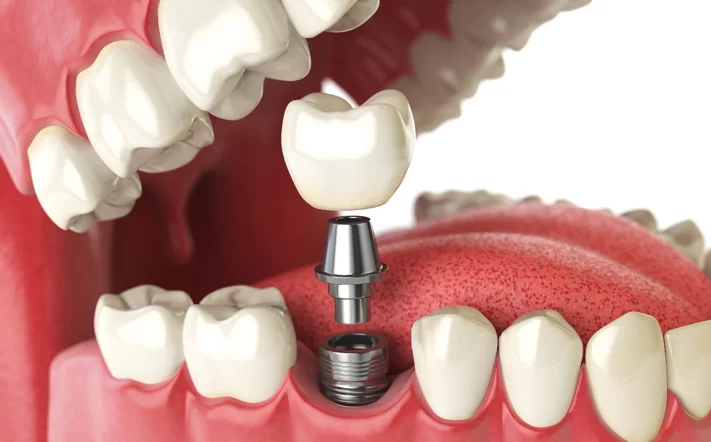
What makes this stage feel reassuring in good clinics is the level of precision involved. The implant is not placed by guesswork. It is positioned according to the planning already done, often with digital guidance or carefully mapped measurements to ensure the final crown will function and look right. That matters not only for stability but also for appearance, especially in visible parts of the mouth. Placement angle, depth, and spacing all influence the final result. Specialists therefore encourage patients not to think of the implant itself as the end goal, but as the anchor for everything that follows. The visible tooth comes later; this stage is about creating the base properly.
The Fourth Expectation Is a Healing Period That Requires Patience and Good Habits
After placement, patients often expect the next step to follow quickly, but one of the defining features of implant treatment is the healing period. This is the stage when the implant integrates with the jawbone, a biological process that cannot be rushed simply because the patient is ready to move on. Specialists usually explain that healing times vary depending on the case, the patient’s general health, whether grafting was involved, and the location of the implant. For some, the process is relatively direct. For others, it takes several months before the site is ready for the next phase.
This period can be psychologically awkward because the key progress is invisible. The implant may look unchanged from the outside, yet important biological bonding is taking place under the gum. Patients are therefore expected to maintain good oral hygiene, attend review appointments, and avoid habits that interfere with healing. Smoking, uncontrolled gum disease, and poor cleaning are recurring concerns because they increase the risk of complications. Specialists often say that implants are not difficult to maintain, but they do require responsibility. They behave more like a long-term investment than a one-off purchase.
Temporary restorations may also be part of this phase, depending on the location of the implant and the treatment plan. In visible areas, some clinics provide a temporary tooth to maintain appearance while the site heals. Even then, patients should understand that the temporary stage is exactly that. It is there to bridge the gap, not to represent the final fit or finish. For anyone pursuing a dental implant London treatment in a busy working life, this is the point where realistic expectations matter most. You may be able to continue normal routines fairly quickly, but the treatment is still unfolding beneath the surface and needs time to stabilise properly.
The Fifth Expectation Is That the Final Tooth Is Designed, Not Simply Attached
Once healing is confirmed, the treatment moves into a stage that many patients find more recognisable: creating the visible tooth. Specialists often say this is where patients begin to feel the result becoming real, but they also caution that the crown, bridge, or denture attached to the implant is not a generic part taken off a shelf. It is designed around the individual mouth. Impressions or digital scans are used to record the shape of the gums, bite, spacing, and surrounding teeth so that the final restoration can sit comfortably and look balanced.
This stage matters as much aesthetically as it does functionally. A well-made implant crown should not only fill a gap but also feel proportionate when speaking and chewing. Colour matching, contours, and the relationship with neighbouring teeth all influence how natural the result appears. In front teeth especially, specialists tend to be meticulous because even small discrepancies in shape or gum line can be obvious. Patients should therefore expect this phase to involve checks, fitting appointments, and occasional refinements before the final restoration is secured.
There is also an important distinction between receiving a tooth and receiving the right tooth. Some patients assume that once the implant has healed, the remaining step is straightforward. In practice, the restorative phase is where comfort, bite precision, and appearance are fine-tuned. That is why specialists encourage patients to communicate honestly if something feels too high, looks too flat, or does not seem to match adjacent teeth. Good implant work is collaborative at this point. The dentist brings technical judgement, but patient feedback also helps shape the final result. When done properly, the finished tooth should feel integrated into daily life rather than like a separate dental object.
The Sixth Expectation Is That Follow-Up Care Determines How Well the Implant Lasts
One of the most persistent misunderstandings about implants is that they are maintenance-free because they cannot decay. Specialists regularly correct that idea. While the implant itself does not get tooth decay, the surrounding gum and bone still need protection. Plaque can accumulate, inflammation can develop, and problems can progress quietly if follow-up care is neglected. That is why aftercare is not a minor add-on after treatment has finished. It is part of the treatment’s long-term success.
Patients should expect regular review appointments, especially in the first year, so the dentist can check stability, bite forces, gum health, and hygiene around the implant. In many cases, hygienist visits become particularly important because cleaning around implant restorations requires consistency and technique. Specialists often explain that the goal is to prevent peri-implant disease, which can threaten the supporting tissue in much the same way gum disease threatens natural teeth. The warning signs are not always dramatic, so routine professional monitoring matters.
This is also the stage where expectations about longevity need to be realistic. Implants can last many years, but they do not become permanent by default. Their success depends on planning, surgical execution, restorative design, and the patient’s daily care. Teeth grinding may require a protective night guard. Smoking may reduce long-term stability. Missed reviews can allow manageable issues to become more difficult. For that reason, specialists usually frame implants not as a shortcut away from dentistry, but as a treatment that rewards maintenance. Patients who understand that from the start are often more satisfied because they see aftercare as part of protecting a substantial investment in oral function and confidence.
The Seventh Expectation Is That Good Treatment Feels Like a Process, Not a Sales Transaction
Perhaps the most useful expectation specialists offer is this: a well-run implant case should feel methodical rather than rushed. In a city with many private dental providers, patients may come across very different ways of presenting treatment. Some clinics are highly educational and transparent, while others may emphasise convenience, limited-time offers, or cosmetic promises. Specialists generally advise patients to notice whether the process feels clinically led. That means the dentist is willing to discuss limitations, explain alternatives, and recommend a slower path where necessary instead of trying to compress everything into a sales narrative.
This matters because implant treatment sits at the intersection of health, function, and appearance. Replacing a missing tooth can improve chewing, support facial balance, and restore confidence, but it still relies on case selection, precision, and follow-through. Patients should therefore expect honest conversations about what can and cannot be achieved, particularly where bone loss, medical conditions, or aesthetic demands make treatment more complex. A trustworthy clinic will not present every case as equally simple.
For many patients, the most reassuring sign is not speed but clarity. They know what stage they are in, what happens next, why healing time matters, and what they will need to do afterward. In that sense, the real value of specialist advice is not just technical explanation. It is the reminder that implant treatment works best when expectations are grounded from the outset. Anyone considering implants in London is likely to have a smoother experience when they judge the process by thoroughness, not just marketing language. When the treatment is explained properly, each stage makes sense, and the final result tends to feel earned rather than merely delivered.